Basic Life Support Training London
At Practical First Aid, our Basic Life Support (BLS) Training London course gives you vital skills to act swiftly and confidently in a medical emergency. Whether you’re a healthcare professional, a workplace first aider, or simply someone who wants to be prepared, our BLS training equips you with life-saving tools through hands-on, realistic scenarios.
- 3-hour practical training session
- Practical, engaging, and scenario-based learning
- Led by expert first aid trainers
EXCELLENTTrustindex verifies that the original source of the review is Google. He’s calm, kind, and highly knowledgeable. He explains everything clearly and makes you feel comfortable throughout. I highly recommend him.Posted on GoogleTrustindex verifies that the original source of the review is Google. Posted on GoogleTrustindex verifies that the original source of the review is Google. Amazing training! I cannot praise enough the materials, dedication to explain everything very clearly, the fun approach and the price is good! I would definitely recommend to anyone interested, especially to our sister nurseries looking for a fun way of learning crucial information! Thank you so much! Letitia & teamPosted on GoogleTrustindex verifies that the original source of the review is Google. Very well paced and informative. Helps to build up confidence in my role as first aider.Posted on GoogleTrustindex verifies that the original source of the review is Google. Great practical training.Posted on GoogleTrustindex verifies that the original source of the review is Google. Really good fun, brilliantly informative.Posted on GoogleTrustindex verifies that the original source of the review is Google. Brilliant first aid training for school. Many thanks!Posted on GoogleTrustindex verifies that the original source of the review is Google. Excellent training session delivered by a friendly and very professional instructor.Posted on GoogleTrustindex verifies that the original source of the review is Google. Really good instructor with great sense of humourPosted on GoogleTrustindex verifies that the original source of the review is Google. Fantastic, well delivered and feel far more confident now.Verified by TrustindexTrustindex verified badge is the Universal Symbol of Trust. Only the greatest companies can get the verified badge who has a review score above 4.5, based on customer reviews over the past 12 months. Read more
Gain Real-World Skills with Our Basic Life Support Training
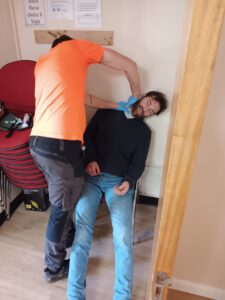
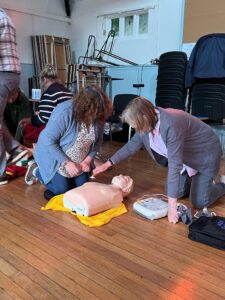
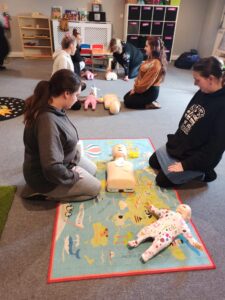
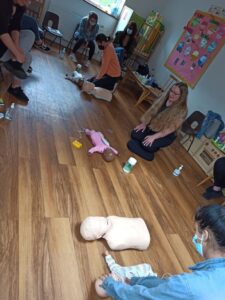
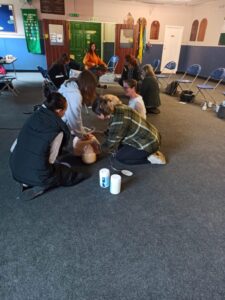
Emergencies can occur anytime, anywhere, and having the confidence to act quickly can mean the difference between life and death. Our Basic Life Support Training London is designed to provide participants with the critical skills needed to deliver immediate, effective first aid in a medical emergency. This hands-on, practical Basic Life Support course in London is suitable for healthcare professionals, first aiders, and anyone interested in life-saving skills. The training includes basic cardiac life support course, CPR, AED usage, and response to choking incidents, ensuring you can provide vital assistance until emergency services arrive. To enhance realism, we incorporate fake blood for wound simulations, mannequins wearing T-shirts for lifelike CPR demonstrations, and choking manikins to ensure hands-on experience, giving participants the confidence to respond effectively in real-life situations.

What Is BLS Training & Why It Matters
“BLS training” refers to the foundational first aid and resuscitation techniques needed to support someone who is unresponsive or suffering a cardiac or respiratory arrest.
BLS goes beyond simply knowing CPR; it covers airway management, safe use of an Automated External Defibrillator (AED), recovery position, and response to choking or other threats to life.
This training is crucial. In many life-threatening situations, quick and appropriate action before emergency services arrive can make the difference between life and death.
With BLS know-how, you become a capable first responder, whether at home, in the workplace, or out in public.
We run open First Aid Course, Paediatric First Aid Course, Emergency First Aid Course and First Aid for Dental Practices in convenient venues across London.
We also offer first aid courses in New Malden, Richmond, Kingston, Wimbledon and more. We ensure our city-centre venues are easily accessible by public transport and offer comfortable learning environments.
What You Learn - Course Content & Skills Covered
During our BLS training, you will master:
Emergency scene assessment & safety: How to check the scene, ensure safety for yourself and others before helping.
Unconscious casualty management: How to assess responsiveness, open the airway, and check breathing.
CPR (Cardiopulmonary Resuscitation): Hands-on practice on mannequins to perform chest compressions and rescue breaths for adults, children, and infants.
Use of AED (Automated External Defibrillator): When to use an AED, how to apply it safely, and how to integrate AED use with CPR to maximise chances of survival.
Choking and airway obstruction response: How to identify choking and respond appropriately, for all age groups.
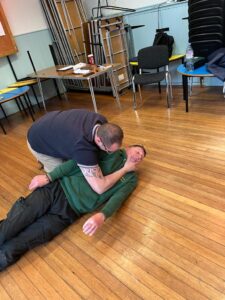
Recovery position & casualty care: How to place an unconscious but breathing person in the recovery position, keep their airway open, and monitor until help arrives.
Our training follows recommended standards and guidelines for BLS in the UK, ensuring that the skills you learn are current, practical and effective.


Why Choose Practical First Aid for Your BLS Course in London
Real-world, practical training: Our sessions are highly interactive and scenario-based: you’ll practise CPR, AED use, choking response, and casualty management on realistic mannequins.
Flexible & convenient: We can deliver training at your workplace or a convenient location in London. We understand busy schedules and aim to make BLS training as accessible as possible.
Certified and compliant: Our course aligns with UK first aid guidelines, giving you a recognised certificate that meets many professional and workplace requirements.
Confidence to act: Beyond technique, we emphasise decision-making, situational awareness, and calm action under pressure, so you don’t just have the skills, you have the confidence to use them.
Why Choose Our Basic Life Support Training?
Experienced Trainers
Learn from professionals with real-world first aid experience.
Recognised Certification
Earn a qualification that boosts your employability and workplace safety.
Hands-On Learning
Engage in realistic training scenarios that prepare you for real-world emergencies.
Flexible Training Options
We bring the course to your venue, making it convenient for businesses across London, Brighton, Slough, and beyond.
Tailored Pricing & Discounts
Custom pricing options available for businesses and group bookings.
How We Work
Discover Your Needs
We start by understanding your goals — whether it's workplace compliance, parent-focused paediatric training, or general first aid. We tailor the right course for you.
Deliver Hands-On Training
Our expert trainers lead engaging, practical sessions using real-life scenarios. We focus on making learning interactive, memorable, and confidence-boosting.
Certify & Support
After successful assessments, you receive nationally recognised certification. We also offer ongoing support and guidance to keep your skills sharp.
Other First Aid Courses We Offer
Emergency First Aid at Work (EFAW)
One-day emergency first aid at work course for who need basic emergency first aid training. Covers CPR, AED use, choking, bleeding control, and workplace incident management.
Three-Day First Aid at Work (FAW)
Designed for high-risk workplaces, this course provides comprehensive training in emergency first aid, including major injuries, fractures, heart attacks, and medical conditions.
2-Day Paediatric First Aid (PFA)
2-Day Paediatric First Aid Course essential for childcare professionals, this EYFS & Ofsted-compliant course covers paediatric CPR, choking, allergic reactions etc.
Blended Paediatric First Aid (BPFA)
A flexible training option combining 6 hours of online learning with 6 hours of practical training, perfect for busy professionals needing Paediatric First Aid certification.
Blended First Aid at Work (BFAW)
A hybrid training approach allows learners to complete part of the training online before attending an in-person session to master CPR, AED use, and workplace first aid.
First Aid at Work Re-qualification (FAWR)
A two-day refresher course for individuals renewing their FAW certification. Updates and reinforces life-saving workplace first aid skills.
First Aid Course Training
Gain essential life-saving skills with our First Aid Course Training in the UK. Learn CPR, wound care, and emergency response to act confidently in critical situations.
First Aid for Dental Practices
Specialist training for dentists covering CPR, AED use, airway management, and emergency response in a dental setting, ensuring GDC compliance.
Emergency First Aid at Work & Forestry
Designed for those working in forestry or rural environments, covering extreme bleeding control, crush injuries, and exposure-related emergencies.
Open First Aid Courses
Public first aid courses for individuals and small businesses needing recognised first aid certification. Held in New Malden, Surrey.



Our Partners and Accreditations:
Frequently Asked Questions
Get instant answers to the common questions in your mind.
Basic Life Support (BLS) training teaches the essential actions to keep someone alive during cardiac arrest or respiratory arrest: prompt recognition, CPR (compressions ± rescue breaths), early defibrillation (AED use), recovery position and calling emergency services. BLS courses follow Resuscitation Council / national guidelines and are tailored for public or healthcare audiences.
Commonly taught five-step summary (public guidance) is:
Check for danger (ensure scene safety)
Check response (shout and gently shake)
Call 999 (ask someone to call and get an AED)
Open airway & check breathing (look/listen/feel)
Start CPR (30 compressions : 2 breaths, or hands-only if unwilling/untrained) - continue until help arrives.
(Variants exist between organisations, but this five-step flow is widely used for public teaching).
A commonly used 7-step mnemonic is DRS-A-B-C-D:
Danger - make scene safe
Response - check if person responds
Send for help - call 999 / ask for an AED
Airway - open airway
Breathing - look/listen/feel for normal breathing
CPR - start chest compressions and rescue breaths (30:2) or hands-only if untrained
Defibrillation - apply an AED as soon as available.
This is the standard emergency sequence used across UK guidance.
The NHS follows Resuscitation Council UK guidelines. NHS/healthcare BLS courses deliver hands-on training in adult/paediatric CPR, use of AEDs, airway and breathing support and the local procedures for escalating care. For healthcare staff there are specific BLS/advanced life support pathways; for the public shorter NHS/charity-run BLS sessions and online resources are available.
Yes, a BLS certification is absolutely worth it. It equips you with the fundamental, life-saving skills needed to respond to a wide range of medical emergencies, such as cardiac arrest, choking, and breathing difficulties. Having a BLS certification can not only be a requirement for many healthcare professions but is also highly beneficial for anyone who wants to be prepared to help in a critical situation. It provides you with the knowledge and confidence to act effectively until professional medical help arrives. In the UK, being certified by a recognised body like the Resuscitation Council (UK) is a key indicator of your competence.
No, BLS training is not considered hard to pass. The courses are designed for both laypeople and healthcare professionals, focusing on practical, easy-to-learn techniques. While you'll need to demonstrate your proficiency in skills like CPR and using an AED, the emphasis is on gaining the confidence to act rather than memorising complex medical theory. Trainers are there to guide and support you, and the practical nature of the course means you get to practice the skills hands-on with a manikin. The core skills are straightforward and are drilled into you until they become second nature.
The time it takes to complete a BLS course can vary, but generally, it's a short, focused training session. Many providers in the UK offer courses that last between 2 to 3 hours. Some courses may be delivered in a blended format, combining online learning with a practical, in-person session. This allows for flexibility and can make the learning process more efficient. The key is to find a course that aligns with the Resuscitation Council (UK) guidelines to ensure you receive high-quality, up-to-date training.
BLS is not the same as CPR, but CPR is a critical component of BLS. * CPR (Cardiopulmonary Resuscitation) is a specific technique that involves chest compressions and rescue breaths to keep blood and oxygen circulating to a person's vital organs when their heart has stopped.
